Anxiety Isn’t About the Future. It’s About Control
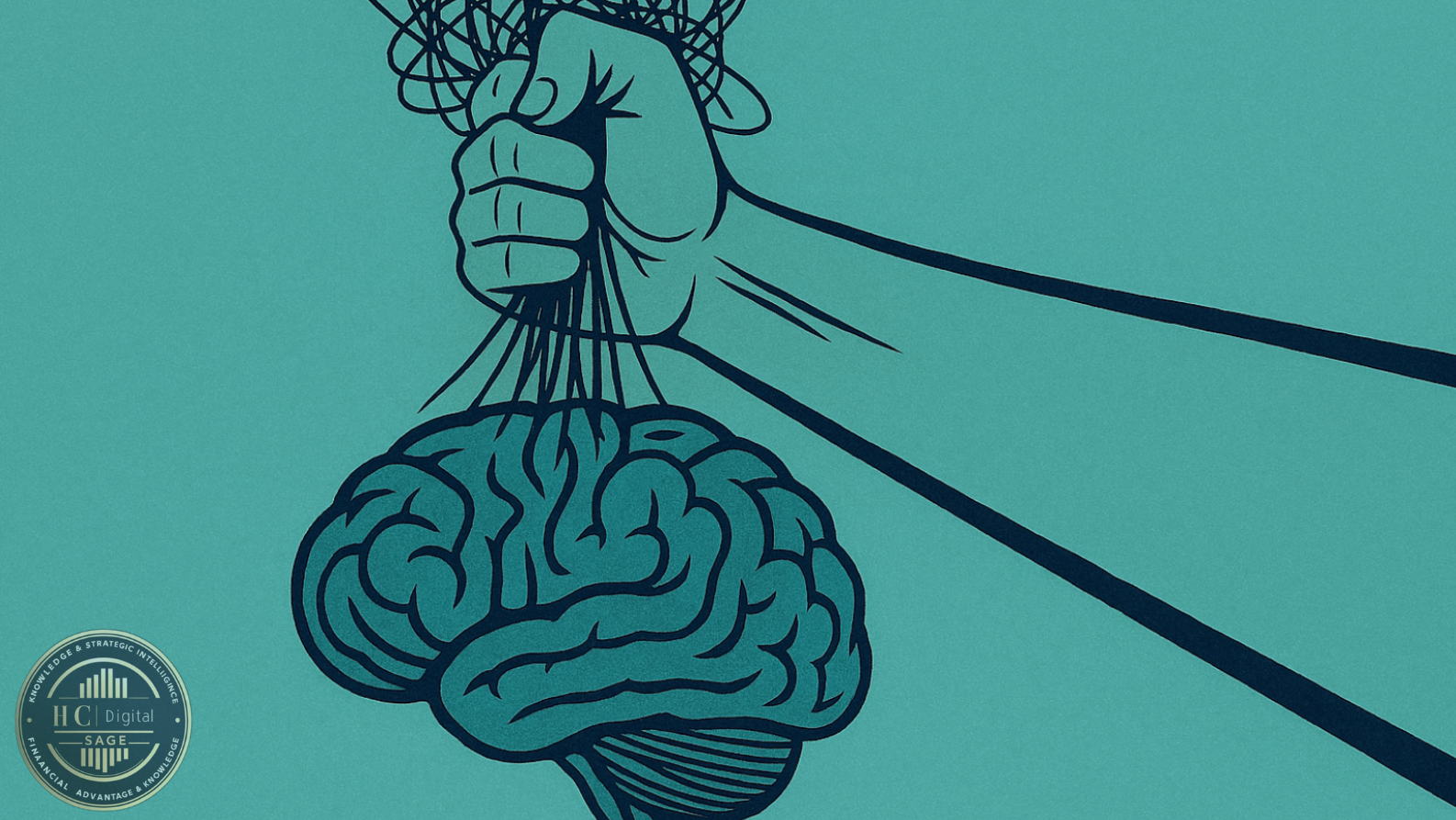
You think anxiety is about what’s coming.
The uncertainty. The worst-case scenarios.
But anxiety, at its core, isn’t rooted in the future at all.
It’s grounded in your failure to dominate the present.
Not dominate in a loud, aggressive way
but in that quiet, obsessive attempt to stabilize every piece of your moment.
The one you don’t fully trust.
The one that keeps shifting despite your rituals, your rules, your readiness.
That’s the truth nobody tells you:
Anxiety isn’t chaos. It’s the side effect of trying to impose order where life insists on being unpredictable.
It doesn’t start with fear it starts with resistance.
A friction between reality and expectation.
Between what’s unfolding and what you demand it should be.
And in that gap, your mind whispers:
“What if I can’t handle this?”
That single thought is the ignition point of the cycle.
It isn’t a question about danger.
It’s a question about capacity. About control. About competence.
And behind it, there’s no real longing for peace what you really crave is certainty.
Not peace of mind.
But answers that don’t change. Outcomes that don’t move. Guarantees that silence the noise.
We don’t panic because of the unknown.
We panic because we have no leverage over it.
That’s why you check your phone every few minutes not for information, but for control.
That’s why you overanalyze old conversations not for meaning, but for safety.
That’s why you can’t sleep not because tomorrow is terrifying, but because tonight won’t let you fix it.
You lie awake, not fearing disaster, but replaying everything you can’t influence.
Every outcome you weren’t fast enough to intercept.
Every thought you wish had come sooner.
This is what anxiety does when you mistake presence for dominance.
You start to believe that peace is something you earn by doing more
when in fact, peace is what begins the moment you stop doing.
But we weren’t taught that.
We were taught to anticipate, to prepare, to outperform uncertainty.
And so we try to control.
And when control doesn’t work we try harder.
This is how it begins.
This is how it stays.
The Loop Between Anxiety and Control
Let’s break this down with surgical clarity.
You feel anxious. Not because something bad is happening but because something might.
And instead of sitting with that discomfort, you try to stabilize it by doing something anything.
So you organize your day.
You write a list.
You replay the conversation you had earlier.
You scroll. You check. You anticipate outcomes for things that haven’t even begun.
It doesn’t feel like panic. It feels productive.
But what you’re doing isn’t solving problems.
You’re negotiating with uncertainty trying to pin it down before it moves again.
And this is where the loop begins.
You believe that planning brings relief.
But when it doesn’t, you don’t stop to question the strategy.
You assume the problem is you.
You plan more.
You micromanage every sentence, every tone, every variable.
And when the anxiety still lingers, you don’t doubt the method you doubt your own competence.
You tell yourself you’re not prepared enough.
Not focused enough.
Not in control enough.
You don’t see that the flaw is in the approach.
You see the flaw in yourself.
The illusion of relief is what fuels the trap
That’s how the loop is built.
Quietly. Elegantly. Without you noticing.
It begins with a single anxious thought.
Followed by a reactive behavior.
Then a brief sense of relief just enough to convince your brain that it worked.
So you do it again. And again. Until the pattern feels like instinct.
Soon, your life stops being a response to reality.
It becomes a system that revolves entirely around one goal:
never losing grip.
But you’re not just managing your schedule anymore.
You’re managing your identity.
How people perceive you.
How much control you appear to have.
Whether or not you seem “fine.”
You think you’re preparing for a flight but what you’re really doing is rehearsing for turbulence that hasn’t even arrived.
You’re anticipating conversations that haven’t happened.
Interpreting judgments no one ever spoke.
Protecting yourself from impacts that only exist in your mind.
And this kind of vigilance?
It drains you.
Not once but constantly.
And still, exhaustion doesn’t signal the end.
It becomes the fuel.
Because the more depleted you feel, the more fragile you become.
And the more fragile you feel, the more control you try to exert just to keep yourself standing.
This is how the loop feeds itself.
It’s self-sustaining.
It’s invisible to others.
And worst of all it’s praised.
People call it “being responsible.”
They admire your discipline.
Your attention to detail.
Your ability to stay ahead of everything.
But what they don’t see is that beneath all of it,
you’re in a silent war with chaos not around you, but inside you.
And every time you try to suppress it, it only grows stronger.
There’s no real peace in that.
There’s only performance.
And performance no matter how flawless
always comes with a cost.
How Control Feeds Anxiety And Why It Feels Safe
Control gives you what anxiety never will:
the illusion that nothing can slip through the cracks if you’re careful enough.
It feels powerful.
Strategic.
Responsible.
It’s the voice in your head that says:
“If I anticipate the problem, I won’t have to suffer through it.”
“If I prepare well enough, I’ll be protected.”
“If I do everything right, I’ll finally be enough or at least untouchable.”
But here’s the fracture beneath that logic:
Control isn’t the opposite of chaos.
It’s a response to fear.
A clean, calculated response to something raw and unresolved inside you.
You don’t build systems because you’re calm.
You build them because you’re terrified of what happens if you don’t.
You don’t overprepare because you’re wise.
You overprepare because you don’t trust yourself to survive failure or even discomfort.
That’s what makes control feel so noble.
So functional.
So addictive.
It works… at first.
You feel anxious.
You reach for control.
You get a brief moment of relief.
Your nervous system settles not because you’re safe, but because your mind thinks it did something useful.
That moment teaches your brain:
“This helps. Do it again.”
So you do.
You check the locks again.
You revise the email again.
You adjust your posture, your tone, your routine.
You stretch your life into a checklist of protective measures.
Eventually, it’s not just your tasks you’re managing it’s your identity.
You won’t eat unless it’s the right time.
You won’t start unless the conditions are perfect.
You won’t rest unless it’s earned through productivity.
This isn’t balance.
This is a behavioral cage one you built yourself.
And the worst part?
You put a nameplate on it:
Discipline.
People admire it.
They say you’re focused. Reliable. Impressive.
But beneath that applause,
you’re hypervigilant.
You’re exhausted.
And you’re completely alone with the pressure to never let the mask slip.
You don’t breathe you calculate.
You don’t trust you monitor.
You don’t live you perform.
And this is what makes control so dangerous:
It doesn’t look like panic.
It looks like precision.
But under that surface is a constant self-surveillance that erodes your sense of safety from the inside out.
Real safety doesn’t come from eliminating chaos.
It comes from realizing you can move through it without dissolving.
And that requires something control will never teach you:
Trust.
In yourself.
In the moment.
In the fact that you don’t need to master everything to be okay.
But trust only grows in the space where you stop managing yourself like a project.
If you want peace, you have to be willing to stop curating the illusion of it.
Control will always promise protection.
But it delivers pressure.
And the longer you hold it,
the more you start to believe that freedom is dangerous
when really, it’s just unfamiliar.
The Exit Isn’t Mastery. It’s Permission.
You’ve been taught that the way out is mastery.
That if you just get strong enough, sharp enough, efficient enough you’ll rise above it.
Above the panic.
Above the doubt.
Above the sense of internal chaos you’ve spent years managing in silence.
But here’s the reality:
You won’t escape anxiety by becoming stronger than it.
Because anxiety doesn’t respond to strength.
It responds to resistance.
And the more you resist what you feel,
the more it tightens its grip.
So the way out?
It’s not force.
It’s not mastery.
It’s permission.
Permission isn’t weakness. It’s the beginning of restoration.
Yes, the anxiety will still come.
You’re not erasing it you’re disarming it.
Instead of scrambling to escape, you’ll learn to meet it.
To sit with it.
To let it pass without demanding that it disappears.
You’ll stop trying to feel invincible and begin building resilience.
That’s the real strength: the capacity to feel deeply without dissolving.
You won’t need to prove you’re in control.
You’ll simply allow yourself to be in process.
And that shift?
It doesn’t look glamorous.
There’s no applause.
No gold star for learning to feel without fixing.
But what you gain is something control could never offer:
Presence.
Not the curated version that looks enlightened online,
but the kind that lets you stop running.
The kind that welcomes you back home raw, uncertain, still standing.
When you stop trying to escape yourself,
you finally get to be yourself.
And that kind of freedom?
For most people, it’s the rarest kind they’ll ever touch.
Anxiety and Control Start with the Same Lie
It often starts with a quiet sentence one that sounds more like common sense than self-sabotage:
“I’m only safe when I’m in control.”
At first, it seems harmless.
Even responsible.
It’s the voice that tells you to double-check the stove, reword the message, or smile politely when you’re falling apart inside.
But this voice isn’t just protective it’s persuasive.
You hear it every day without realizing you’ve agreed to its terms.
It’s a silent contract:
Trade authenticity for safety.
Trade presence for preparation.
Trade truth for performance.
It convinces you that peace is something to be earned not felt.
That you’re only allowed to rest once every possible threat has been neutralized.
But that’s not peace. That’s surveillance.
Real peace doesn’t come from domination.
It comes from non-abandonment.
You begin to heal the moment you stop curating yourself
when you stop trying to be stable, agreeable, and capable at the cost of your truth.
Because safety doesn’t begin when the world stops being dangerous.
It begins when you stop abandoning yourself in response to that danger.
Wholeness isn’t perfection.
It’s truth.
Healing Doesn’t Come from Mastery It Comes from Self-Loyalty
You’ve spent years trying to earn rest by being impressive.
By being efficient.
By being invulnerable.
But you don’t need more control.
You need less self-erasure.
You need less pretending.
Less overcorrecting.
Less managing who you think you’re supposed to be.
You don’t heal through self-mastery.
You heal through self-loyalty.
By staying with yourself when you’re scared.
By breathing instead of fixing.
By remaining present when every part of you wants to vanish into productivity, planning, or avoidance.
You start small.
You pause when you want to force.
You breathe when you want to escape.
You resist the urge to make the discomfort go away and instead, you just stay.
You don’t need to transform everything overnight.
You just need to stop walking out on yourself
every time something feels uncertain.
Let that be enough.
Not forever.
Just for today.
And tomorrow, do it again
not because you’ve mastered it.
But because you remembered
you’re allowed to live without proving your right to exist.
Below are some links that may help and provide a better understanding of the topic discussed in this article.
What Comes After Surrender
You don’t need to fix the moment.
You just need to stop abandoning yourself in it.
Peace doesn’t arrive through mastery —
It begins when you stop making discomfort your enemy.
That’s not giving up.
That’s coming home.

Thank you for reading. If this article hit something real inside you, HC Digital is just getting started.
There’s more and you’re ready for it.

About the Author Henrique Camargo | Website
Founder of HcDigitalStore, a platform specializing in financial education and digital strategies. Focused on innovative and practical solutions, dedicated to empowering individuals and businesses to achieve their goals and turn ideas into tangible results.